1. Direct Answer: Maximizing Volumetric Flow in High-Speed 3D Printing
High-flow hotends eliminate volumetric flow rate bottlenecks in modern rapid-prototyping workflows by expanding the thermal melt zone, improving heat conduction, and sustaining consistent chamber pressures during rapid filament transit.
When printing at elevated speeds, standard extrusion setups can struggle to melt plastic fast enough, leading to intermittent underextrusion, brittle layer bonding, and mechanical gear slippage. Transitioning to bi-metal heatbreaks, wear-resistant hardened steel nozzles, and high-wattage ceramic heating elements provides thermal stability across standard materials like PLA and PETG as well as abrasive composite filaments.
2. Key Technical Findings
Melt Zone Dwell Time
Extended thermal zones provide sufficient dwell time for polymer liquefaction at high extrusion rates.
Thermal Isolation
Bi-metal heatbreaks prevent heat creep into cold zones, preventing swelling during rapid retractions.
Abrasion Resistance
Hardened steel nozzles withstand composite filaments like carbon fiber, but require higher nozzle temperatures.
Drop-in Modularity
Quick-swap pre-assembled toolhead units eliminate manual torque hot-tightening and avoid junction leaks.
3. Upgrade Paths by Hardware Architecture
Bambu Lab A1 and A1 Mini Production Users
Adopt pre-assembled drop-in units with hardened steel nozzles to avoid manual alignment and handle abrasive filaments.
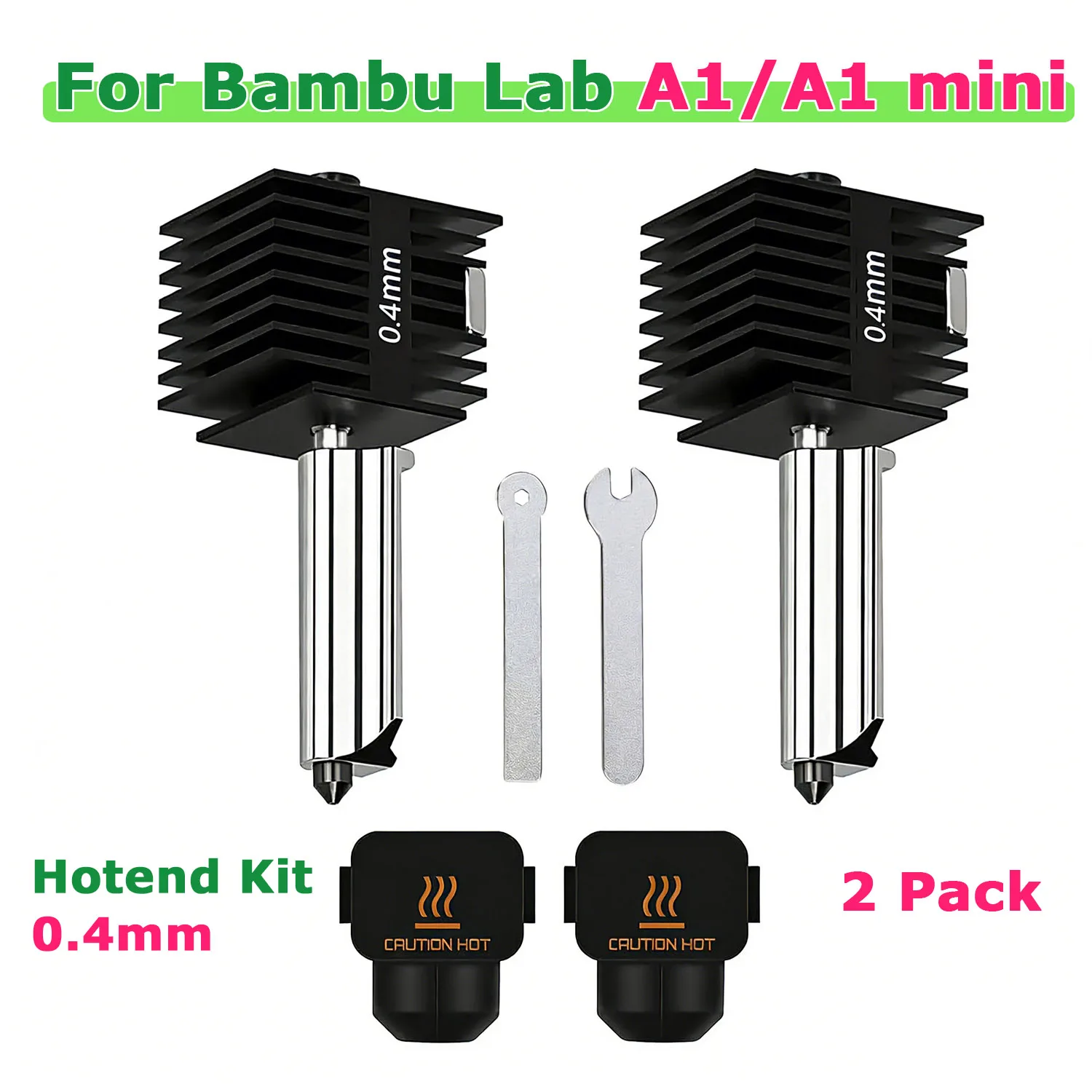
2 Pack A1 Mini/A1 Hotend Kit, 0.4mm Hardened Steel Nozzle, High-Temp Extruder…
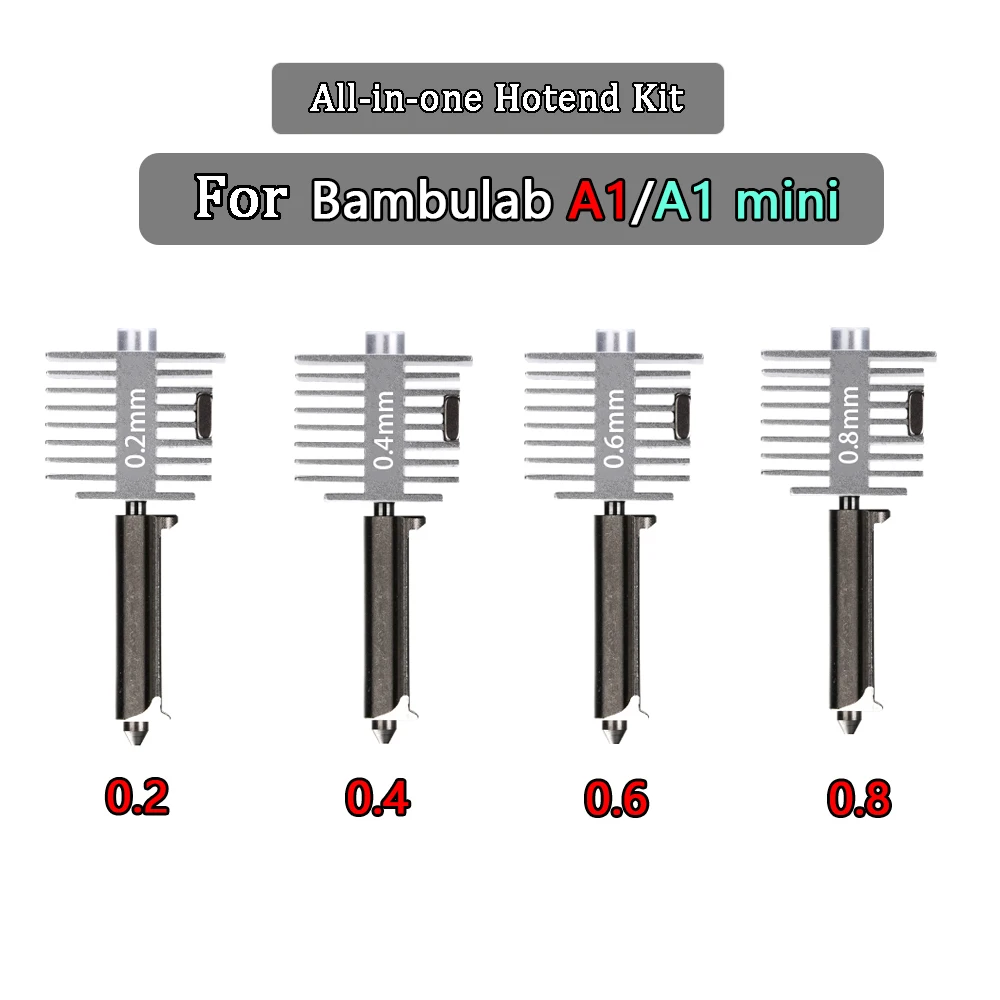
Upgraded Hotend Kit For Bamb Lab A1/A1 Mini Fast Speed Hot End Assembly 0.2/0…
Creality High-Speed CoreXY Operators
Install quick-swap bi-metal assemblies to maintain high flow rates while protecting feeder systems from heat soak.

Creality K2/K2 Plus/Hi Combo For 3D Printer Parts Quick-Swap Nozzle Quick-Re…
Standardized Open-Source Platform Maintainers
Upgrade legacy M6 blocks on Ender 3 or Prusa MK3 setups with hardened steel V6 nozzles for wear resistance.

V6 Nozzle Hardened Steel 0.2/0.4/0.6/0.8/1mm 1.75mm Filament M6 3D Printer No…
Enclosed CoreXY Thermal Restoration
Replace degraded ceramic heating sleeves and temperature sensors to prevent thermal runout under aggressive cooling.
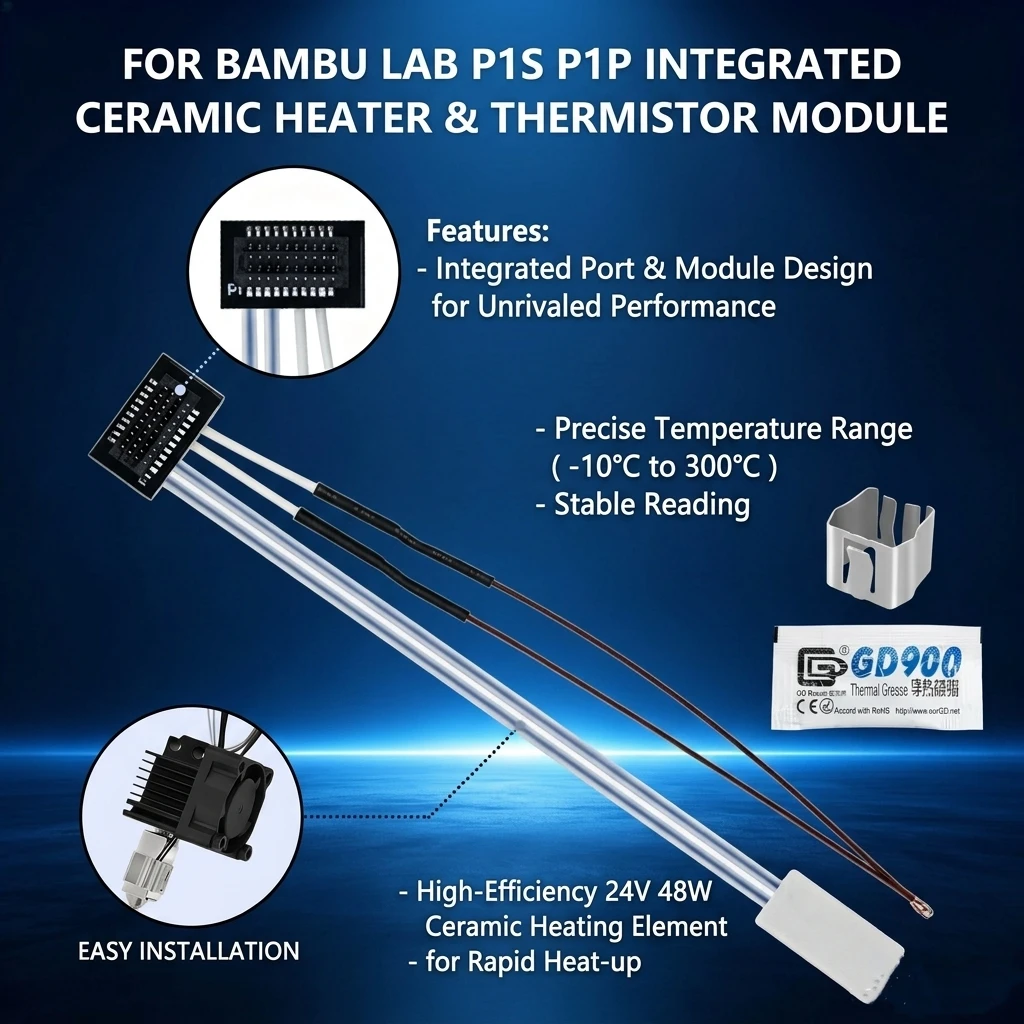
Caremic Heater & Thermistor For Bambu lab P1P P1S HotEnd Ceramic Cartridge Te…
4. Core Factors Governing High-Flow Hotend Performance
Selecting replacement hotends or thermal components requires aligning machine kinematics with thermal transfer capacity.
System reliability depends on balancing thermal conduction, physical wear resistance, and structural isolation.
- Melt Zone Geometry: A longer heated cavity increases maximum volumetric flow (mm³/s) by extending filament dwell time.
- Bi-Metal Heatbreaks: Titanium or stainless steel combined with copper jackets restricts upward heat transfer into heatsinks.
- Nozzle Composition: Hardened steel resists wear from carbon fiber and glow additives, though it conducts heat slower than brass.
- Heating Element Efficiency: Ceramic ring heaters deliver fast, uniform radial heating and recover quickly from cold-filament influx.
Creality K2/K2 Plus/Hi Combo For 3D Printer Parts Quick-Swap Nozzle Quick-Re…
2 Pack A1 Mini/A1 Hotend Kit, 0.4mm Hardened Steel Nozzle, High-Temp Extruder…
V6 Nozzle Hardened Steel 0.2/0.4/0.6/0.8/1mm 1.75mm Filament M6 3D Printer No…
Caremic Heater & Thermistor For Bambu lab P1P P1S HotEnd Ceramic Cartridge Te…
Upgraded Hotend Kit For Bamb Lab A1/A1 Mini Fast Speed Hot End Assembly 0.2/0…
5. Technical Comparison Matrix
| Product | Machine Compatibility | Key Material / Configuration | Price (USD) | Rating Score | Review Count |
|---|---|---|---|---|---|
| Creality K2/K2 Plus/Hi Combo For 3D Printer Parts Quick-Swap Nozzle Quick-Release Bi-Metal Hardened Steel High-Flow Hotend Kit | Creality K2, K2 Plus, Hi Combo | Bi-metal throat, hardened steel nozzle | $5.19 | 92.8% | 556 |
| 2 Pack A1 Mini/A1 Hotend Kit, 0.4mm Hardened Steel Nozzle, High-Temp Extruder Replacement for Bambu Lab 3D Printer | Bambu Lab A1, A1 Mini | Hardened steel (0.4mm pre-assembled) | $10.37 | 98.7% | 1,261 |
| V6 Nozzle Hardened Steel 0.2/0.4/0.6/0.8/1mm 1.75mm Filament M6 3D Printer Nozzle For Ender 3 Hotend Titan Extruder Prusa I3 MK3 | Ender 3, Prusa MK3, Titan V6 | Hardened steel (0.2–1.0mm bores) | $4.69 | 98.9% | 973 |
| Caremic Heater & Thermistor For Bambu lab P1P P1S HotEnd Ceramic Cartridge Temperature Sensor For Bambulab P1S P1P 3d printer | Bambu Lab P1P, P1S Hotends | Ceramic heating element, thermistor | $4.26 | 98.0% | 1,016 |
| Upgraded Hotend Kit For Bamb Lab A1/A1 Mini Fast Speed Hot End Assembly 0.2/0.4/0.6/0.8mm Hardened Steel Nozzle 3D Printer Part | Bambu Lab A1, A1 Mini | Hardened steel (0.2–0.8mm options) | $2.07 | 98.0% | 1,497 |
6. Component Decision Matrix
| Product | Thermal Transfer & Recovery | Wear Resistance | Installation & Swapping | Value Metric |
|---|---|---|---|---|
| Creality K2/K2 Plus/Hi Combo For 3D Printer Parts Quick-Swap Nozzle Quick-Release Bi-Metal Hardened Steel High-Flow Hotend Kit | 8.8 | 9.2 | 8.5 | 8.4 |
| 2 Pack A1 Mini/A1 Hotend Kit, 0.4mm Hardened Steel Nozzle, High-Temp Extruder Replacement for Bambu Lab 3D Printer | 9 | 9.4 | 9.7 | 8.6 |
| V6 Nozzle Hardened Steel 0.2/0.4/0.6/0.8/1mm 1.75mm Filament M6 3D Printer Nozzle For Ender 3 Hotend Titan Extruder Prusa I3 MK3 | 7.8 | 9.5 | 7 | 9.2 |
| Caremic Heater & Thermistor For Bambu lab P1P P1S HotEnd Ceramic Cartridge Temperature Sensor For Bambulab P1S P1P 3d printer | 9.5 | 7 | 7.5 | 9 |
| Upgraded Hotend Kit For Bamb Lab A1/A1 Mini Fast Speed Hot End Assembly 0.2/0.4/0.6/0.8mm Hardened Steel Nozzle 3D Printer Part | 8.9 | 9.3 | 9.6 | 9.8 |
7. Operational Evidence & Practical Trade-offs
Known facts
Hardened steel exhibits lower thermal conductivity than brass or copper alloys.
Longer melt zones hold increased volumes of molten polymer, affecting stringing dynamics.
Quick-swap designs standardize toolhead interfaces but restrict nozzle geometry to compatible assemblies.
Analysis
Slicing profiles typically require temperature compensation of +5°C to +15°C to offset steel thermal sluggishness.
Retraction tuning is critical on extended melt zones to prevent drawing molten plastic past the thermal barrier.
Uncertainties
Specific volumetric limits depend on ambient chamber temperature, extruder gear torque, and polymer melt index.
8. Evaluation Boundaries and Methodology
- Assessment is strictly based on verified marketplace catalog specifications, materials, and aggregated feedback.
- No physical laboratory testing, flow rate calorimetry, or thermal imaging benchmarks were conducted.
- Wear longevity against high-percentage abrasive composites was evaluated from manufacturer data and user feedback.
9. Final Recommendation
Select hotend components aligned directly with your printer's toolhead architecture—leveraging quick-swap assemblies for rapid turnaround or hardened M6 nozzles for universal open-source maintenance.
Proprietary quick-swap units from Bambu Lab and Creality eliminate leak paths between heatbreaks and nozzles while maintaining production uptime. For open-source machines, standard V6 hardened steel nozzles remain the most cost-effective path to abrasive composite handling.