Modern high-speed 3D printers are frequently constrained not by the acceleration of their motion systems, but by the volumetric melting capacity of their hotends. When extruding at speeds above 200–300 mm/s or using larger nozzle diameters, standard melt zones struggle to transfer sufficient thermal energy into the filament core. Upgrading to a high-flow hotend assembly expands this thermal threshold, allowing for consistent extrusion, reduced under-extrusion artifacts, and faster overall print cycles.
Whether you are retrofitting an open-source bed slinger or outfitting the latest generation of enclosed CoreXY machines, selecting the appropriate hotend requires balancing heating architecture, nozzle wear resistance, platform compatibility, and thermal management. Below, we analyze five verified hotend upgrade solutions catering to distinct printer ecosystems.
---Top High-Flow Hotends Evaluated
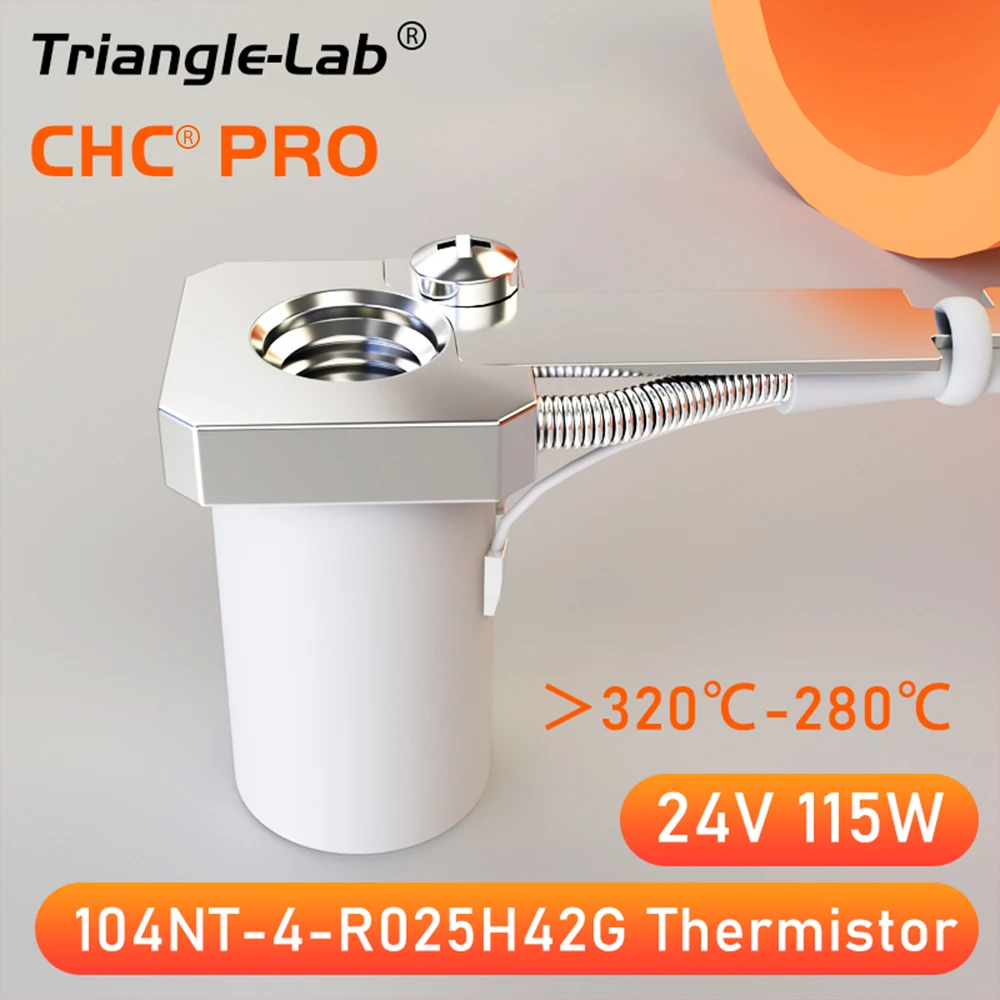
1. RS Trianglelab 115W High Power CHC Pro Ceramic Kit
Primary Application: Ender 3, CR-10, Prusa MK3S, BLV, and Volcano-style toolheads
Reference Price: ~$19.92 | Rating Score: 98.8% (262 reviews)
The Trianglelab CHC Pro kit replaces traditional cartridge-and-block heating assemblies with a cylindrical 115W ceramic heating core (CHC). This design provides 360-degree radial heat distribution around the melt zone, drastically reducing warm-up times and sustaining consistent high-flow extrusion under aggressive cooling. Designed around the elongated Volcano melt geometry, it is an optimal choice for classic open-source platforms requiring serious volumetric output for wide-line or high-layer-height manufacturing.
- Strengths: Ultra-fast heating via 115W cylindrical ceramic element; Volcano melt zone geometry; broad compatibility with open-format printers.
- Trade-offs: High power draw requires verification of power supply and mainboard MOSFET headroom; ceramic rings can be brittle if subjected to mechanical impacts.
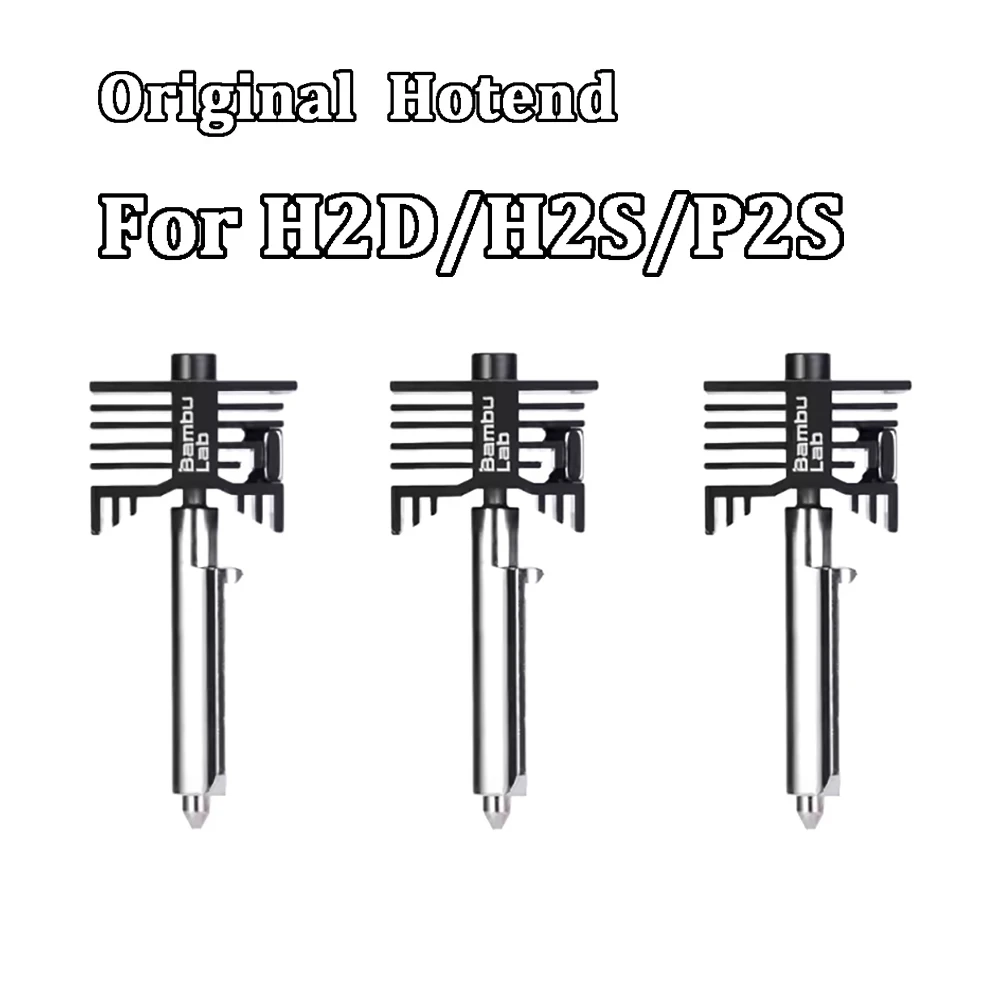
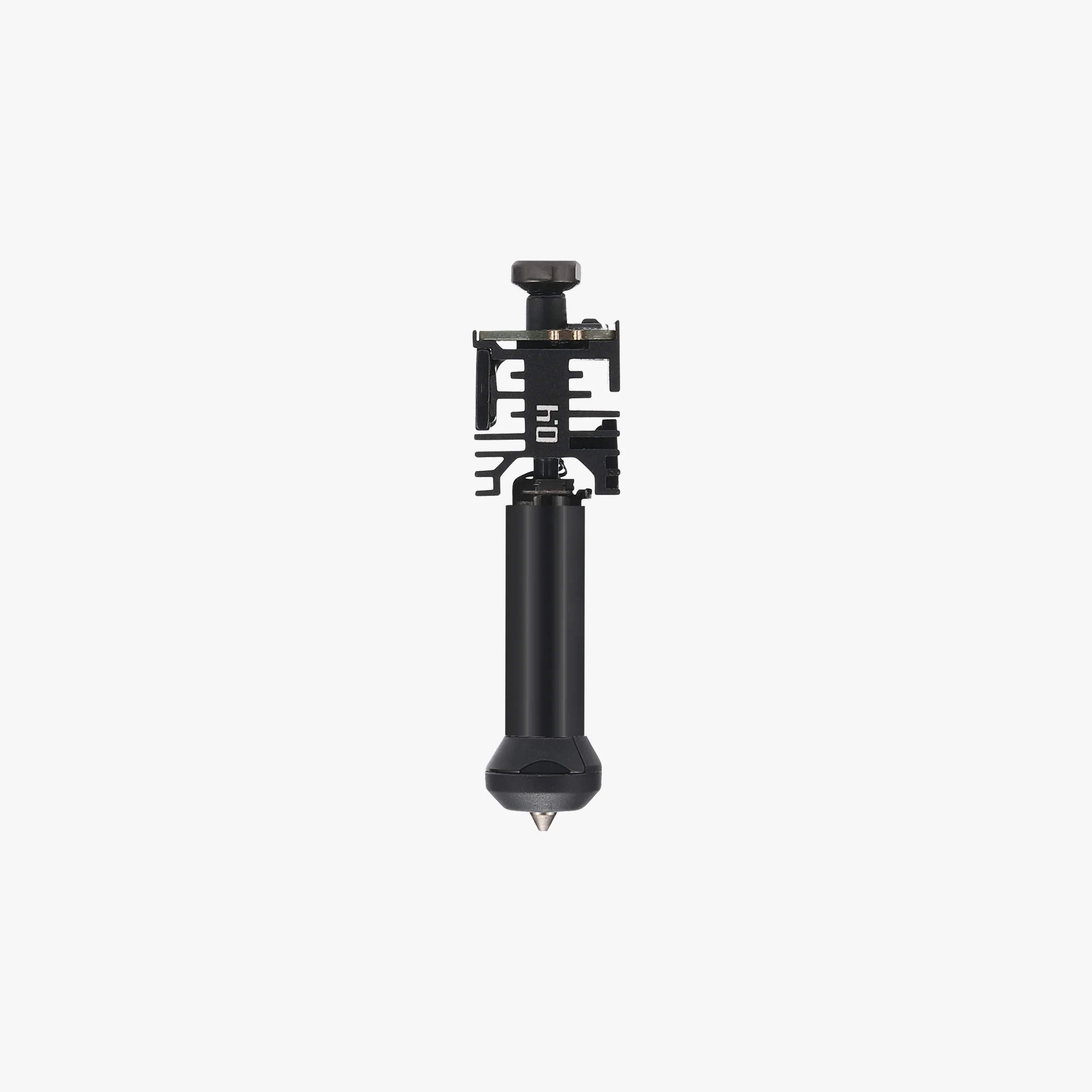
2. Original P2S High Flow Hardened Steel Hotend Kit
Primary Application: Bambu Lab P2S, H2S, H2D, H2C series
Reference Price: ~$23.20 | Rating Score: 97.3% (178 reviews)
Aimed at high-throughput enclosed setups, this factory-spec high-flow assembly features hardened steel and stainless steel nozzle configurations across aperture sizes from 0.2mm up to 0.8mm. The extended internal melt path improves volumetric flow rates when printing engineering thermoplastics, while the hardened steel nozzle construction resists abrasion from carbon-fiber, glass-fiber, and glow-in-the-dark additives.
- Strengths: Native drop-in integration with Bambu Lab P2S and related variants; wide nozzle sizing range (0.2/0.4/0.6/0.8mm); wear-resistant hardened steel construction.
- Trade-offs: Higher entry price compared to third-party drop-in clones; hardened steel exhibits slightly lower thermal conductivity than bare brass or copper alloys.
3. Creality K2 / K2 Plus / Hi Combo Bi-Metal Hardened Steel Hotend Kit
Primary Application: Creality K2, K2 Plus, and Hi Combo setups
Reference Price: ~$5.08 | Rating Score: 93.6% (535 reviews)
Engineered specifically for Creality's modern high-speed ecosystem, this hotend combines a quick-swap mechanical interface with a bi-metal heatbreak and a hardened steel nozzle tip. The bi-metal transition creates a sharp thermal gradient to curb heat creep during prolonged enclosed prints, while the extended heating zone maintains uninterrupted material flow at rapid movement speeds.
- Strengths: Extremely cost-effective replacement; bi-metal thermal barrier minimizes heat creep; quick-swap format streamlines servicing.
- Trade-offs: Specialized mounting profile limits application outside the designated Creality K2 platform ecosystem.
4. Bambu Lab H2C Compatible Induction Hotend
Primary Application: Bambu Lab H2C series toolheads
Reference Price: ~$12.64 | Rating Score: 97.5% (155 reviews)
This specialized hotend is built for Bambu Lab H2C platforms, available in standard and high-flow configurations. Utilizing an induction-based heating layout, this component provides targeted, responsive temperature control across the melt chamber. It is tailored for users seeking a direct replacement or an upgrade to ensure uniform extrusion profiles during high-acceleration runs.
- Strengths: Induction-focused architecture; available in dedicated high-flow formats; maintains tight dimensional tolerances for automated calibration routines.
- Trade-offs: Platform-restricted design with narrow third-party documentation; installation requires careful handling of internal wiring and sensors.
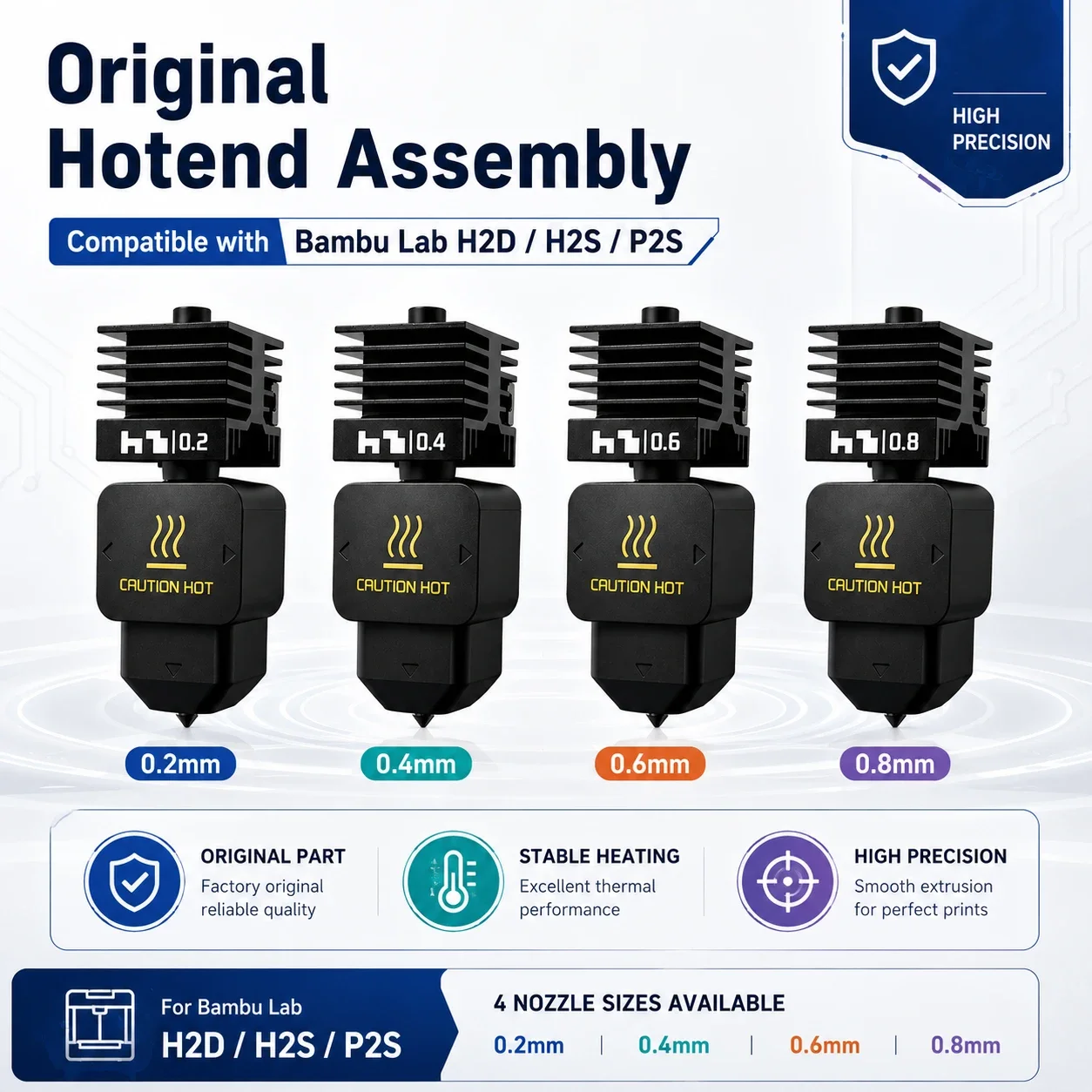
5. High Flow Quick-Swap Replacement Hotend for Bambu Lab (H2D/H2S/P2S)
Primary Application: Bambu Lab H2D, H2S, P2S series (0.4/0.6/0.8mm options)
Reference Price: ~$5.58 | Rating Score: 93.5% (163 reviews)
Serving as an accessible, high-value alternative to OEM parts, this assembly delivers quick-swap convenience with nozzle options ranging from standard 0.4mm to rapid-prototyping 0.8mm sizes. The hotend emphasizes ease of installation and elevated volumetric flow rates without requiring structural toolhead modifications.
- Strengths: Budget-friendly spare or replacement; modular quick-swap sizing options; straightforward drop-in installation.
- Trade-offs: Third-party manufacturing tolerances require careful initial PID tuning and bed-level calibration checks prior to mission-critical prints.
High Flow Hotend Replacement Compatible with Bambu Lab H2D H2S P2S, 0.4/0.6/0…
Key Decision Criteria: How to Choose a High-Flow Hotend
| Factor | Ceramic / CHC Systems | Drop-In Enclosed Kits (Bambu / Creality) |
|---|---|---|
| Heating Architecture | 360° cylindrical ceramic elements (high wattage, e.g., 115W) | Integrated ceramic tiles or induction-ready custom blocks |
| Nozzle Durability | Standard Volcano brass, plated copper, or hardened steel | Hardened steel / bi-metal construction for abrasive filaments |
| Installation Complexity | Requires manual wiring, mounting adapters, and firmware PID tuning | Plug-and-play quick-swap connectors matching OEM specifications |
| Primary Benefit | Maximum raw volumetric flow for open-source modification | Reliable high-speed extrusion without voiding enclosure geometry |
1. Volumetric Flow vs. Motion Capabilities
Before upgrading, confirm that your printer's kinematics and cooling system can support elevated flow rates. High-flow hotends melt more plastic per second, but if your part-cooling fans cannot solidify the deposited plastic rapidly, overhangs and bridging will deteriorate.
2. Filament Abrasiveness and Material Choice
Standard brass nozzles provide superior thermal conductivity but wear down quickly when running filled materials (such as carbon fiber, glass fiber, or metal composites). If you intend to print abrasive filaments, select a hotend equipped with a hardened steel nozzle or a bi-metal structure to avoid rapid bore degradation.
3. Heater Power and Electrical Safety
High-wattage components, such as the 115W Trianglelab CHC Pro, demand substantial power from your controller board and power supply. Always ensure your mainboard MOSFETs, wiring gauges, and terminal blocks are rated to handle the increased current safely before deployment.
---Audience Guidance: Which Upgrade Fits Your Setup?
- For Open-Source Tinkers and Custom Builds (Ender 3, CR-10, Prusa): The RS Trianglelab 115W CHC Pro Kit provides the most versatile and thermally aggressive platform, bringing modern ceramic heating speeds to classic Volcano setups.
- For Creality K2 / K2 Plus Owners: The Creality K2 Bi-Metal Hardened Steel Hotend provides a cost-effective, drop-in replacement that resists abrasive wear and mitigates heat creep.
- For Production Bambu Lab Users Requiring Maximum Durability: The Original P2S High Flow Hardened Steel Hotend delivers factory compatibility and abrasive resistance across diverse nozzle apertures.
- For Budget Bambu Maintenance and Quick Swaps: The High Flow Replacement Assembly ($5.58) and H2C Induction Hotend ($12.64) offer accessible spare parts to keep high-speed print farms operating with minimal downtime.
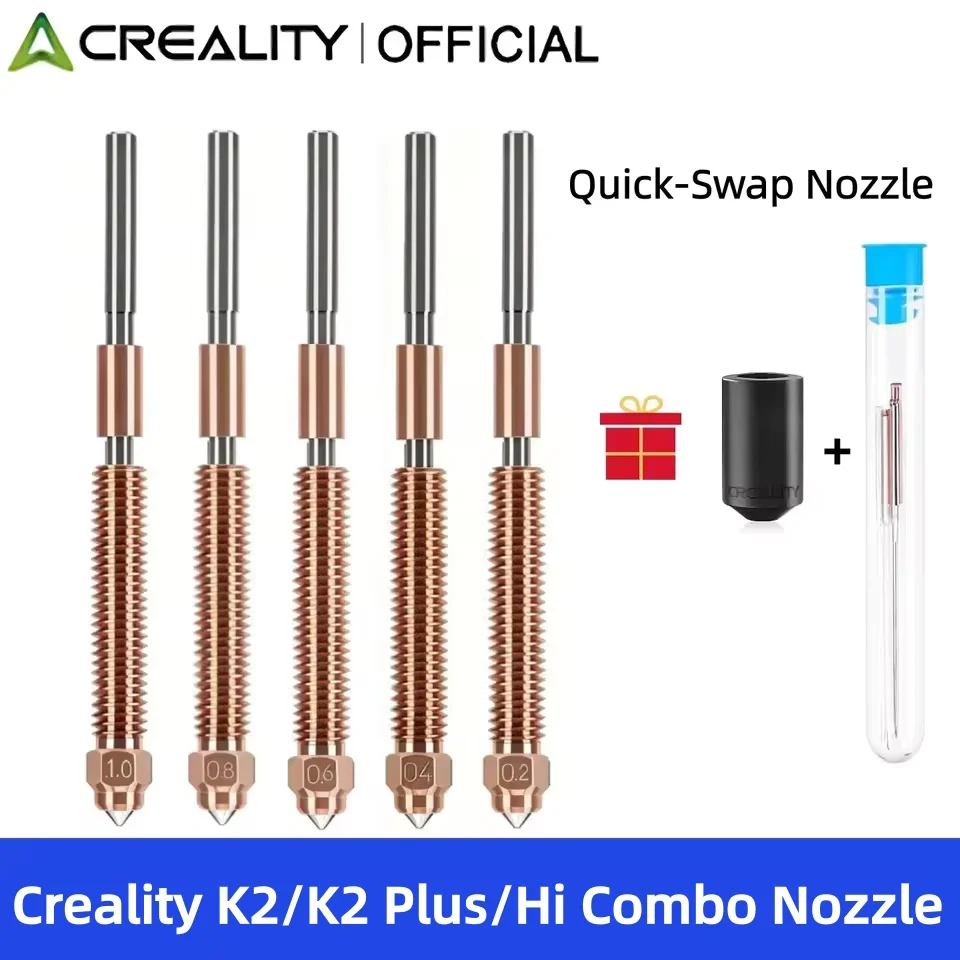
Creality K2/K2 Plus/Hi Combo For 3D Printer Parts Quick-Swap Nozzle Quick-Re…
Operational Trade-offs and Considerations
While high-flow hotends resolve underextrusion at high speeds, they introduce specific engineering challenges:
- Stringing and Oozing: The larger internal melt volume contains more liquid polymer at any given moment, which can exacerbate stringing. Retraction distance, speed, and wiping settings typically need recalibration.
- Thermal Runaway & PID Tuning: Transitioning to a ceramic core or a larger heater block changes the thermal mass of the system. A PID auto-tune must be executed immediately after installation to prevent temperature fluctuations and safety faults.
- Purge Waste: Larger melt zones require more material purging during color or material changes, slightly increasing waste during multi-material prints.
How We Evaluated
This editorial guide is based on comprehensive technical specification analysis, engineering design evaluation, and aggregated marketplace performance data. We analyzed heater power delivery, nozzle metallurgy, melt zone geometry, and platform compatibility across manufacturer specifications and verified user feedback. No physical destructive or laboratory benchmark testing was conducted for this review. Prices cited are global reference USD estimates and may fluctuate based on regional taxes, currency rates, and seller promotions.