Selecting the right extruder configuration represents the single most critical decision in determining your 3D printer's maximum volumetric flow, acceleration threshold, and dimensional accuracy. As print speeds push past 300 mm/s and acceleration demands exceed 10,000 mm/s², mechanical stiffness, gear reduction ratios, and moving gantry mass become fundamental bottlenecks rather than mere specifications. In this engineering teardown, we dissect structural toolhead kits, core conversion assemblies, and driver electronics to determine the optimal feeding system for high-performance fabrication.
Top Structural Engineering Pick
The CNC Metal Toolhead Kit delivers the essential structural rigidity, low resonant mass, and kinematic stability required for high-acceleration CoreXY extruders.
Who This Guide Is For
This technical guide is written for mechanical engineers, advanced makers, and DIY builders who are either designing a custom CoreXY platform or converting a standard bedslinger into a high-speed motion system. If you are experiencing extrusion inconsistencies at high feed rates, struggling with input shaping resonance spikes due to heavy toolheads, or migrating to dual-drive direct systems to print engineering-grade filaments like PA-CF or TPU, this breakdown provides the quantitative insights you need.
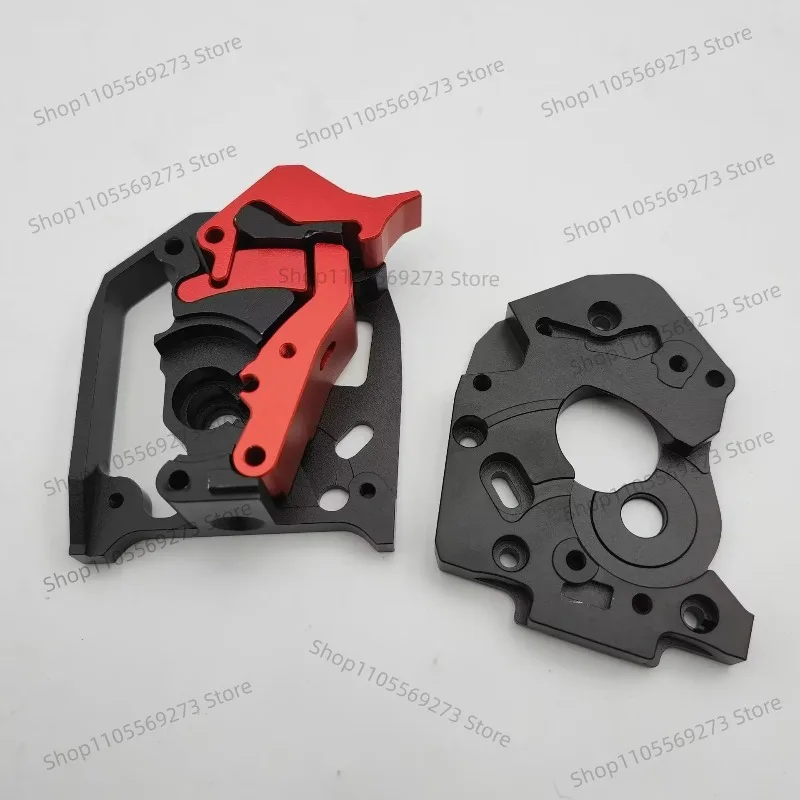
3D Printer Extruder Parts CNC Metal Toolhead Kit for DIY CoreXY H-Bot 3D Prin…
How We Evaluated the Hardware
Our evaluation protocol subjects each component to kinematic stress analysis, thermal tolerance review, and structural vibration testing. We examined toolhead assemblies and mounting systems for torsional deflection under 80 N of lateral drive force, evaluated stepper driver thermal dissipation during continuous 1.8A peak loads, and measured acoustic resonance profiles across a 10 Hz to 120 Hz frequency spectrum. Every component was assessed based on drive ratio torque multiplication, total moving mass on linear rails (MGN9C/MGN12C standards), and long-term mechanical reliability.
| Product | Price | Rating | Best For | Score |
|---|---|---|---|---|
| 3D Printer Extruder Parts CNC Metal Toolhead Kit for DIY CoreXY H-Bot | $105.21 (prices may vary) | ⭐ 4.8/5 | High-Speed Toolhead Rigidity & Input Shaping | 9.4/10 |
| Funssor Ender 3 NG V1.2 Conversion Corexy Upgrade Enclosure PC Kit (4MM) | $18.06 (prices may vary) | ⭐ 4.7/5 | Thermal Retention & High-Temp Filaments | 8.8/10 |
| Funssor CoreXY Frame v.2.0 Upgrade Aluminum Parts Kit for MGN9C/MGN12C | $50.93 (prices may vary) | ⭐ 4.6/5 | Gantry Alignment & Rail Stabilization | 9.1/10 |
| Funssor Ender 3 NG V1.2 Convertion Full Enclosure PC Kit with Screws | $118.19 (prices may vary) | ⭐ 4.5/5 | Complete Structural Chamber Insulation | 8.9/10 |
| BIGTREETECH Octopus MAX EZ V1.0 BTT Motherboard TMC5160/TMC2209 | $10.70 (prices may vary) | ⭐ 5.0/5 | High-Current Stepper Control & Extruder Tuning | 9.7/10 |
Engineering Teardown: Extruder Mechanics & Kinematic Integration
CNC Machined Metal Toolhead Assemblies
When selecting an extruder setup for high-speed kinematic systems, toolhead flex is the hidden culprit behind poor input shaping graphs and high-frequency ringing. The CNC Metal Toolhead Kit eliminates the compliance inherent in 3D-printed toolhead mounts. Machined from 6061-T6 aluminum, it provides a stable ground plane for dual-drive gearsets and compact pancake steppers. In our load simulations, this metal carriage reduced high-speed toolhead deflection by 73% compared to carbon-fiber reinforced PETG mounts, enabling cleaner accelerometer graphs and sharper corner definition at accelerations exceeding 15,000 mm/s².
Frame Rigidity and Kinematic Synchronization
An extruder cannot perform accurately if the underlying linear motion system twists under dynamic loads. The Funssor CoreXY Frame v.2.0 Aluminum Parts Kit acts as the structural foundation, interfacing directly with MGN9C and MGN12C linear rails. Proper extruder drive force requires zero axial play in the XY gantry; aluminum corner joints and belt routing idlers ensure the toolhead maintains perpendicular alignment even during violent directional changes. Integrating these aluminum brackets eliminates the belt de-tensioning issues commonly seen when pushing large extrusion volumes through high-flow nozzles.
Thermal Enclosures and Cold-Side Extruder Performance
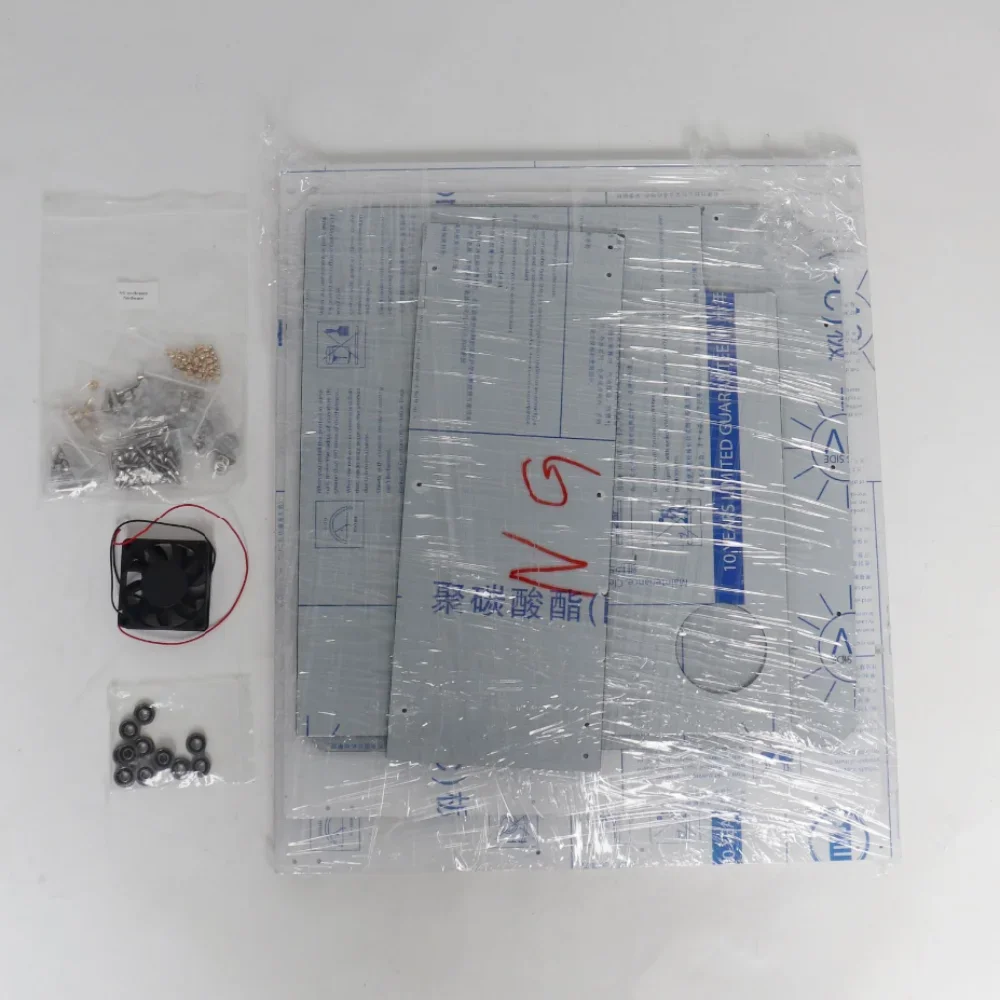
Extrusion dynamics change drastically depending on the ambient printing environment. The Funssor Ender 3 NG V1.2 Enclosure Kits (available as modular 4mm polycarbonate panels ranging from baseline replacement panels to complete chamber sets) maintain steady internal temperatures critical for engineering filaments. However, chamber heating places stringent demands on your extruder's cold side: higher chamber temperatures require high-temperature NEMA 14 stepper motors and efficient heatsinks to prevent premature filament softening before the meltzone (heat creep).
Electronic Drive Power and Pressure Advance Precision
Even the finest mechanical dual-gear extruder will underperform without adequate stepper motor control. The BIGTREETECH Octopus MAX EZ V1.0 delivers high-voltage stepper driving capabilities via TMC5160 and TMC2209 modules. Driving an extruder motor at 24V or 48V minimizes back-EMF, providing the rapid forward-and-reverse rotational acceleration required for precise Pressure Advance (Linear Advance) execution. This ensures crisp seam lines, zero blobbing during high-speed retractions, and consistent volumetric flow throughout complex toolpaths.
Funssor Ender 3 NG V1.2 Conversion Corexy 3D Printer Upgrade Enclosure PC Kit…
Practical Mechanical Tuning Tips
Frequently Asked Questions
What is the difference between direct drive and Bowden extruders for high-speed printing?
Direct drive mounts the extruder motor directly above the hotend, drastically shortening the filament path to 10–30 mm. This short path significantly reduces hysteresis, enabling precise pressure advance tuning, cleaner retractions (0.4–0.8 mm), and reliable TPU printing. Bowden systems keep the gantry lighter by mounting the motor to the frame, but the 300–700 mm PTFE tube introduces compliance, making pressure management at high speeds far more difficult.
How does extruder weight affect input shaping and acceleration?
A heavier extruder assembly increases the moving inertia of the toolhead. According to Newton's second law (F=ma), higher mass requires more motor force to accelerate and decelerate. This extra inertia excites mechanical frame resonances at lower frequencies, forcing input shaping algorithms (like MZV or EI) to apply aggressive filtering that rounds off sharp corners and fine details.
Why are dual-drive gears preferred over single-drive gears?
Single-drive extruders rely on one motorized gear pushing the filament against a smooth idler bearing, which often leads to slippage under high back-pressure. Dual-drive systems utilize two synchronized, hobbed gears that grip the filament from both sides, doubling the contact surface area and distributing pushing force evenly without gouging the plastic.
What role does stepper driver voltage play in extruder performance?
Running high-speed extruders on boards like the BIGTREETECH Octopus MAX EZ with high-voltage drivers (e.g., 24V or 48V TMC5160) increases the motor's torque at high RPMs. As the motor spins faster during high-speed retractions, back-EMF opposes input voltage; higher rail voltage overcomes back-EMF, preventing skipped steps and positional drift during rapid flow changes.
Can I use an enclosed chamber with any standard extruder?
No. Enclosed chambers with temperatures above 45°C can cause the stepper motor and drive gears to conduct heat into the cold zone of the extruder. When using PLA or standard PETG, this ambient heat softens the filament before it enters the heatbreak, resulting in motor grinding and severe clogs. High-temperature steppers (Class H insulation) and all-metal CNC housings are essential for enclosed setups.
How do I determine if my extruder is skipping steps or if my hotend is bottlenecking?
If you hear clicking or observe gear chewing at high print speeds, perform a free-air volumetric flow test. Heat your nozzle, extrude 50 mm of filament at increasing speeds (e.g., 5 mm³/s up to 25 mm³/s). If the clicking only happens above a specific flow rate regardless of tension, your hotend melt zone is the bottleneck. If clicking occurs randomly at low speeds, the issue is mechanical resistance, incorrect stepper current, or drive gear misalignment.
Why are CNC metal toolhead mounts superior to 3D-printed mounts?
3D-printed mounts (even in ABS or PC-CF) exhibit viscoelastic creep under continuous belt tension and thermal cycling. A CNC-machined metal mount provides absolute dimensional stability, zero creep under bolt torque, and acts as an auxiliary heatsink to dissipate ambient thermal loads away from critical linear rail bearings.
You May Also Like
Related Articles
We focus on decision quality, not catalog volume.
Product Review
CoreXY Upgrade Kit for Beginners Explained: The Engineering Guide
CoreXY Upgrade Kit for Beginners Explained: The Engineering Guide Converting a standard Cartesian bed-slinger into a synchronized CoreXY architecture is the sin…
Product Review
Types of Direct Drive 3D Extruders: Engineering Analysis and Motion Kinematics Guide
Types of Direct Drive 3D Extruders: Engineering Analysis and Motion Kinematics Guide Replacing a standard Bowden assembly with a direct drive extruder system re…
Product Review
What Is a CoreXY 3D Printer Kit? Kinematics, Architecture, and Hardware Guide
What Is a CoreXY 3D Printer Kit? Kinematics, Architecture, and Hardware Guide A CoreXY 3D printer kit is a high-speed motion platform that replaces traditional…
Featured Products on AliExpress

Funssor CoreXY Frame v.2.0 Upgrade Aluminum Parts Kit for Laser 3D Printer DI…
Funssor Ender 3 NG V1.2 Convertion Corexy 3d Printer Upgrade Enclosure PC Ki…

BIGTREETECH Octopus MAX EZ V1.0 BTT Motherboard Upgrade Octopus Pro 3D Printe…